A well-considered positioning for a brand that stands out
–
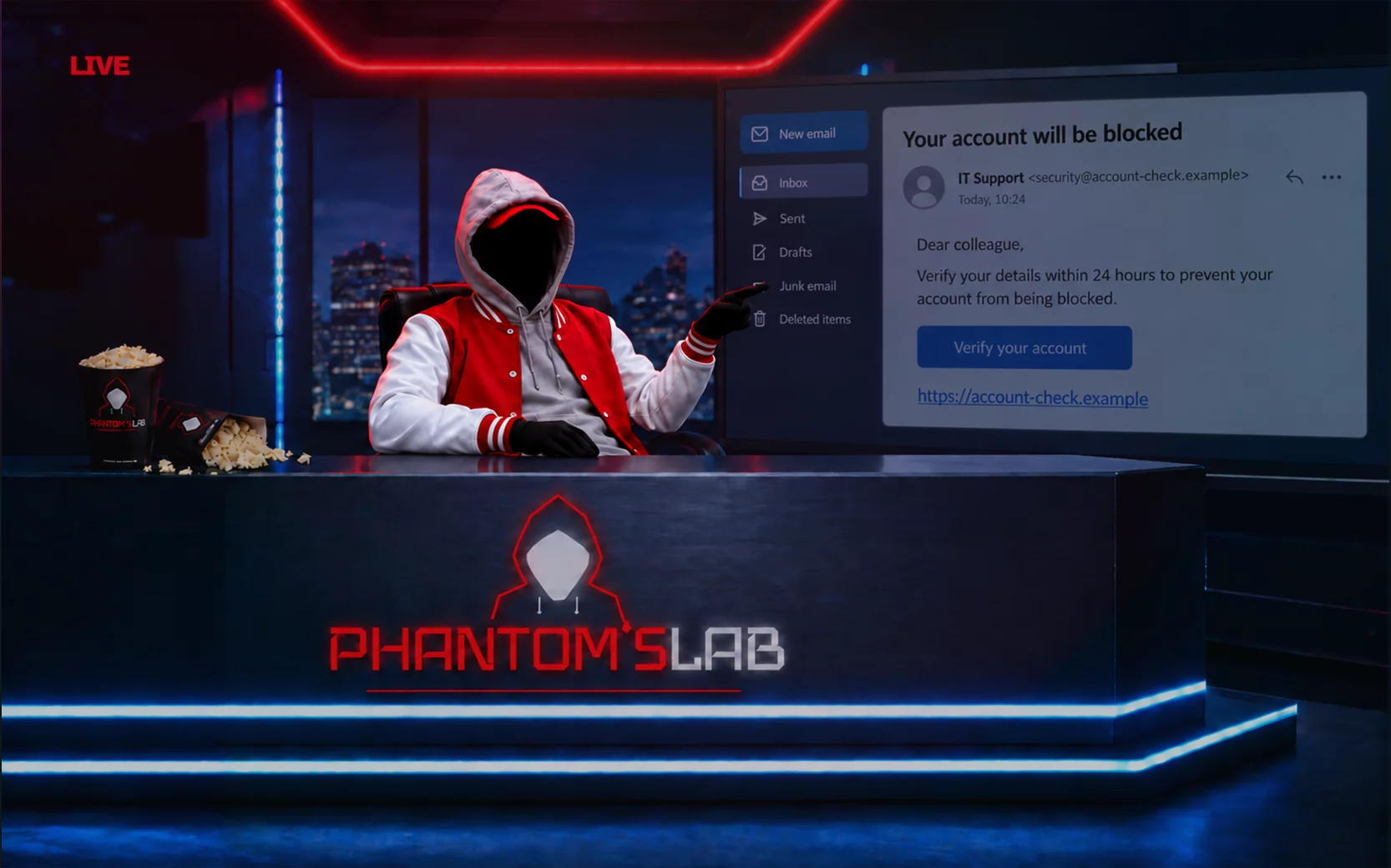
Phantom’sLab is a cybersecurity awareness company built around entertainment, founded by Joris van den Bergh and Dirk Delisse. Its product range consists of microlearning modules, a serious game, and phishing simulations. Phantom is the face of the company, a mascot that also acts as an influencer across LinkedIn, Instagram, YouTube, and TikTok, publishing short, sharp content that keeps its audience alert without feeling like yet another mandatory training session.
The company works with organizations ranging from mid-sized businesses to government, healthcare, and education, and lists clients including Mars, Toyota, and Rabobank alongside several universities.
The challenge
From a single game to a full awareness program in a saturated market
Phantom’sLab started by building gamified digital games and quizzes that companies could book for one-off cybersecurity awareness activities. That business found its edge when a CISO client asked for something bigger.
“Could you also build something like a cybersecurity game to build awareness, based on your gamification knowledge?”
The question that led to Phantom’sLab’s first standout product.
It worked. People kept talking about the training weeks after the fact, simply because it did not feel like a training at all. Yet success with that one product created a recurring question from prospects: could Phantom’sLab also deliver a full, structured awareness program, not just a single game? At the same time, the market for full programs looked crowded, with most established providers leaning on generic, formulaic content people had already seen many times over.
Phantom’sLab had strong credibility with the cybersecurity consultants it worked alongside, but one of its two founders comes from outside the cybersecurity industry himself, which made a confident, well-defined market position essential before the company could credibly compete for that larger opportunity. Op de website kwam die kennis alleen nauwelijks naar voren, waardoor een zelfverzekerde, scherp gedefinieerde marktpositie essentieel was voordat het bedrijf geloofwaardig kon meedingen naar die grotere kans.
The solution
A three-part growth engine: strategy, service, and conversion
We opened with a strategic session that brought in the whole team, including sales, e-learning, and Phantom’sLab’s in-house cyber expert. After all, the new positioning has to reflect how the business actually is rather than assumptions from the top.
Growth strategy
The growth strategy started with interviews across sales, the two founders, and Phantom’sLab’s e-learning expert, so the strategy that followed reflected how the business actually worked rather than assumptions made from the top.
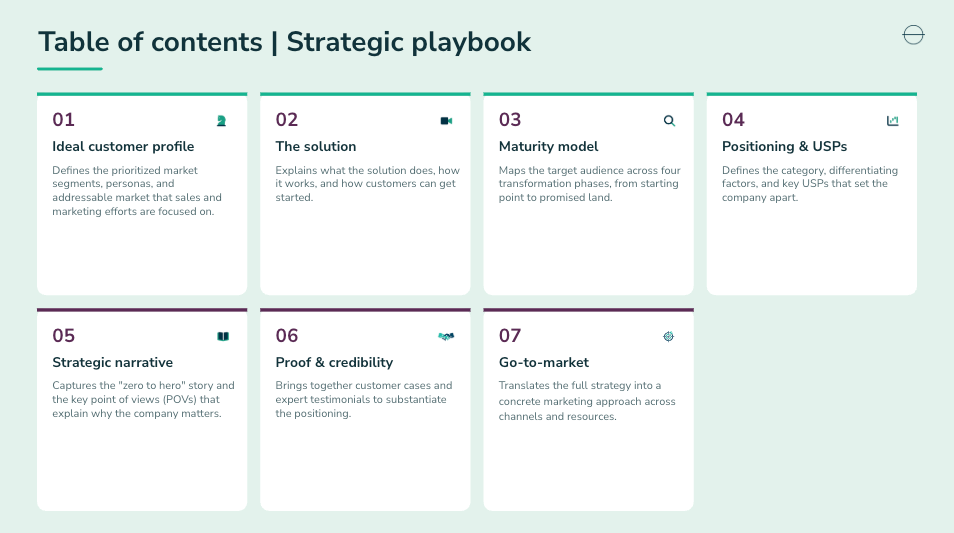
Those conversations became the basis for a first draft of a strategic playbook, built to cover everything a growing company needs in order to say the same thing consistently.
What is a strategic playbook?
A strategic playbook typically works as the shared reference point everyone in the company pulls from. That means:
- Sales uses it to decide which companies to pursue and which to let go, and to describe the product the same way in every conversation, instead of chasing every lead and improvising the pitch each time.
- Marketing uses it to keep every piece of content, from LinkedIn posts to website copy to ad campaigns, aligned with the same positioning and narrative, so a prospect gets a consistent story no matter where they encounter the company.
- New hires get onboarded with it, so they inherit the company’s positioning instead of picking it up piecemeal from whoever trained them.
When the market or the product changes, the playbook gets updated, rather than each department quietly drifting into its own version of the story.
Once that draft existed, we tested it directly with the founders in a dedicated strategy session, to make sure it matched how Joris and Dirk actually wanted to run the business. From there we went further, interviewing existing clients and prospects who had not yet bought, to validate the emerging positioning. With that feedback processed, we finalized the playbook.
The finished playbook became the foundation for a complete website rebuild, built in Lovable and structured entirely around the new positioning.
Growth Service
The strategic session gave Phantom’sLab a clear read on its ideal customer profile: a niche target audience within the Netherlands, roughly 2,000 companies in total. A niche audience this size means we can make sure the entire group actually sees Phantom’sLab’s content, repeatedly, instead of spreading a message thin across people who will never buy. That repeated visibility builds brand awareness, so that when one of those 2,000 companies is finally ready to buy, Phantom’sLab is the name that comes to mind.
That strategy takes shape in four ways:
- Content matched to the buying journey. Not every prospect in that group is at the same point in their decision Someone hearing about Phantom’sLab for the first time needs proof that gamified training actually works and is worth a closer look, while someone already comparing awareness training vendors needs concrete detail: how the product works, what results look like, and how implementation actually happens. Sending the same content to both groups wastes the attention of people further along and overwhelms people who are just getting started. That’s why we map out what a prospect needs to see at each stage of their decision and create content specifically for that stage.
- Targeted LinkedIn campaigns. We run niche LinkedIn ad campaigns aimed specifically at that predefined group of roughly 2,000 companies, so they see Phantom’sLab come up again and again. The results? As a result, Phantom’sLab is already top of mind the moment they start thinking about new e-learning.
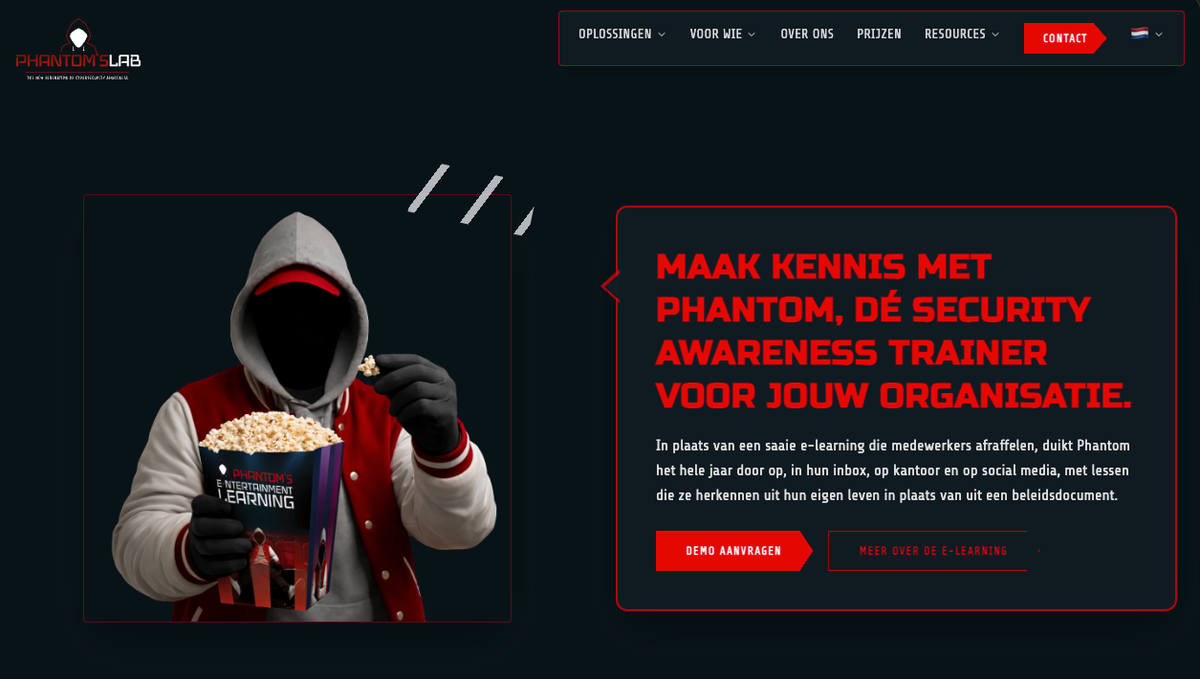
- A website rebuild. We are redoing Phantom’sLab’s entire website to make it more to-the-point, so potential buyers can actually find the information they are looking for instead of digging through generic messaging to get there.
The results
What’s clear so far
It’s still early. The growth strategy and positioning work are complete, but the service and conversion stages haven’t started yet. What’s clear today:
- A clear target audience and marketing plan. Phantom’sLab now knows exactly which roughly 2,000 companies to focus on, and has a concrete plan for reaching them instead of guessing where its limited marketing time is best spent.
- Clear positioning. hantom’sLab has a defined market position, tested directly with real prospects, that sets it apart in a market full of generic, look-alike awareness training providers.
Time will tell what the broader results look like as the growth service and conversion stages get underway.